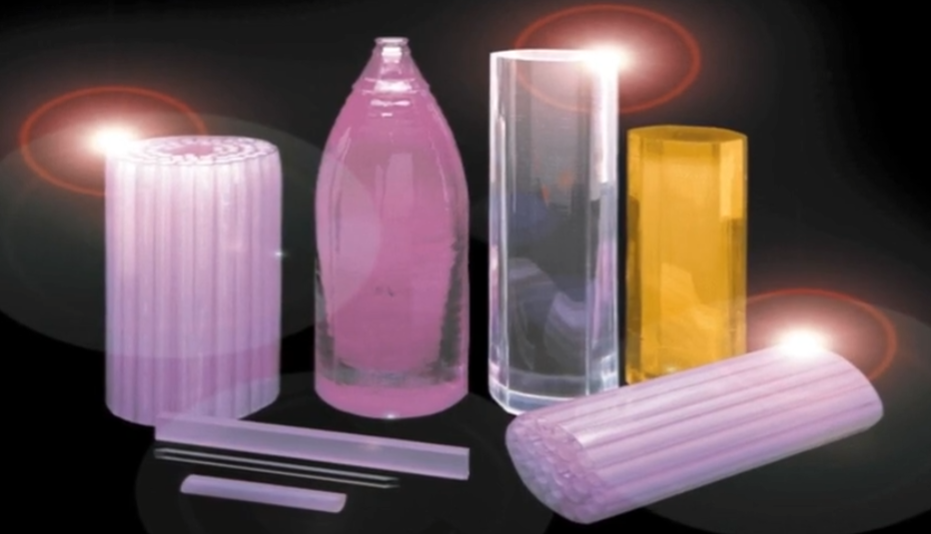
In the dazzling world of gemstones, you've probably heard of rubies, sapphires, and are familiar with the brilliance of diamonds. But did you know there's a lab-grown gem that is vibrant, lustrous, and can mimic the beauty of many natural stones? Let's meet today's star—Yttrium Aluminium Garnet, a versatile "all-rounder" in the jewelry world.
1. What Exactly Is It? A Name That's a Mouthful
Yttrium Aluminium Garnet, commonly known by its abbreviation: YAG.
- Decoding the Name: "Yttrium" and "Aluminium" are two metallic elements, and "Garnet" indicates it shares the same crystal structure as the natural garnet family. So, you can think of it as a synthetic crystal with a garnet structure.
- Key Identity: It is a synthetic gemstone, not found in nature. This means it's grown in laboratories using high-tech methods, resulting in crystals that are often more perfect and possess higher clarity than many natural gems.
2. YAG's "Superpowers": Why Is It So Valued?
As an excellent synthetic material, YAG boasts several praiseworthy properties:
- High Hardness: It has a Mohs hardness of 8.5. This makes it very scratch-resistant, ideal for everyday wear, and places it just below diamond (10) and corundum (ruby/sapphire, 9).
- High Dispersion: Its dispersion (often called "fire") is 0.028. While lower than diamond's (0.044), it still produces captivating flashes of spectral colors, especially under light.
- Excellent Luster: It exhibits a bright vitreous to sub-adamantine luster, appearing brilliantly shiny when cut and polished.
- Perfect Clarity: Being synthetic, it can be grown to be almost entirely free of impurities and inclusions, resulting in remarkably clear and transparent crystals.
3. The Art of Transformation: YAG Comes in Many Colors
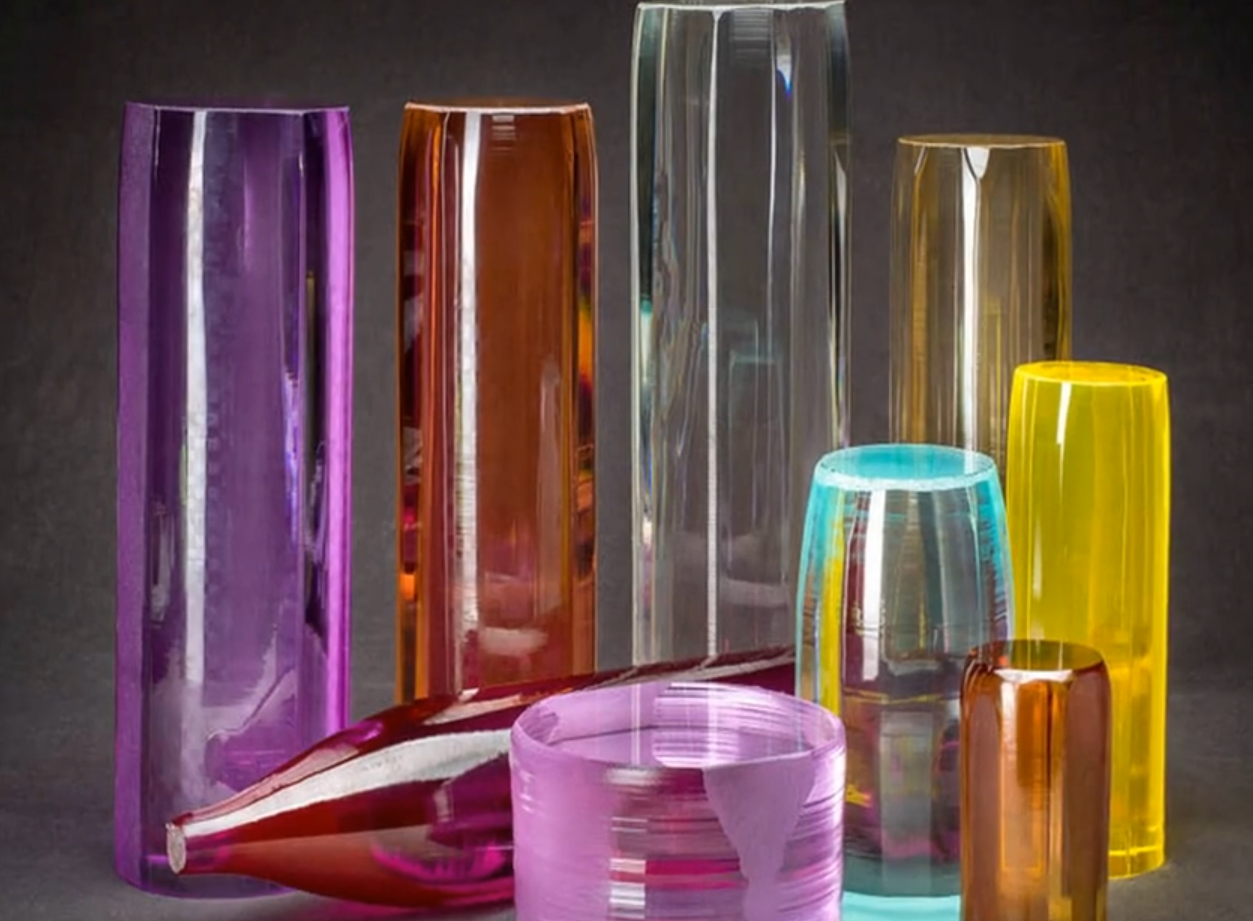
Pure YAG is colorless. However, by adding different trace elements during its growth process, it can display a variety of vivid colors, imitating many natural gems:
- Colorless YAG: In the late 20th century, it was one of the best diamond simulants, offering an affordable yet visually impressive alternative (later largely supplanted by cubic zirconia).
- Neodymium-doped YAG: Adding neodymium gives it a lovely lilac color, which can subtly change under different lighting conditions.
- Chromium-doped YAG: With chromium, it produces a vibrant green YAG, comparable in color to tsavorite garnet.
- Cerium-doped YAG: This can create yellow or yellow-green hues.
- Other Colors: Techniques also allow for the creation of blue, pink, and other shades.
4. YAG ≠ "Fake"; It's an Honest "Alternative" Star
The term "synthetic" often carries a negative connotation of being "fake," but this is a common misconception. It's important to view YAG correctly:
- Clear Identity: Reputable vendors will clearly identify it as "Synthetic Yttrium Aluminium Garnet" or "YAG." It circulates in the market under its own name, not intended to deceitfully imitate natural gems.
- Excellent Value: It offers the hardness, luster, and beauty of high-end gems at a very accessible price, allowing more people to enjoy wearing fine jewelry.
- Crucial Industrial Use: Beyond gemology, YAG is a key material in high-tech industries. Most notably, Neodymium-doped YAG is an essential crystal for the core components of medical and industrial lasers.
5. How to Identify YAG?
For the average person, the most reliable methods are:
- Check the Certificate: Agemological lab report will explicitly state the identity as "Synthetic Yttrium Aluminium Garnet" or "YAG."
- Professional Appraisal: Experts can easily distinguish it from diamond or natural garnet by measuring its refractive index, density, and other physical properties.
In Conclusion
Yttrium Aluminium Garnet (YAG) is like a gemstone artisan from the future. Using the power of technology, it creates beautiful crystals that are pure, hard, and brilliantly colorful. It is both a high-value, fashionable accent for your jewelry box and an unsung hero silently powering high-tech industries.
Next time you see a strikingly clear, colorful, and affordable stone in a jewelry store, why not ask, "Is that YAG?"—you might discover that the charm of this synthetic gem is equally worthy of appreciation.